
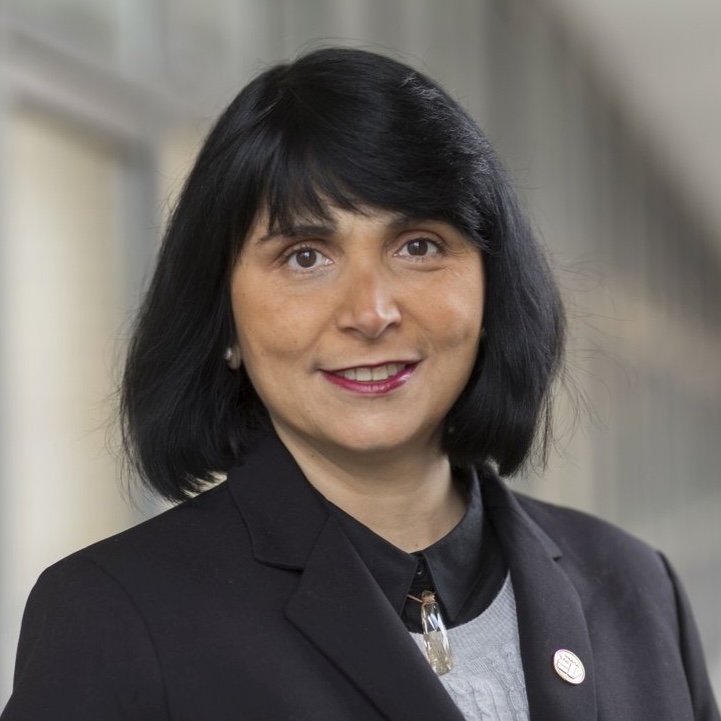
Maria-Esther Vidal
Leibniz University of Hannover, TIB
Germany
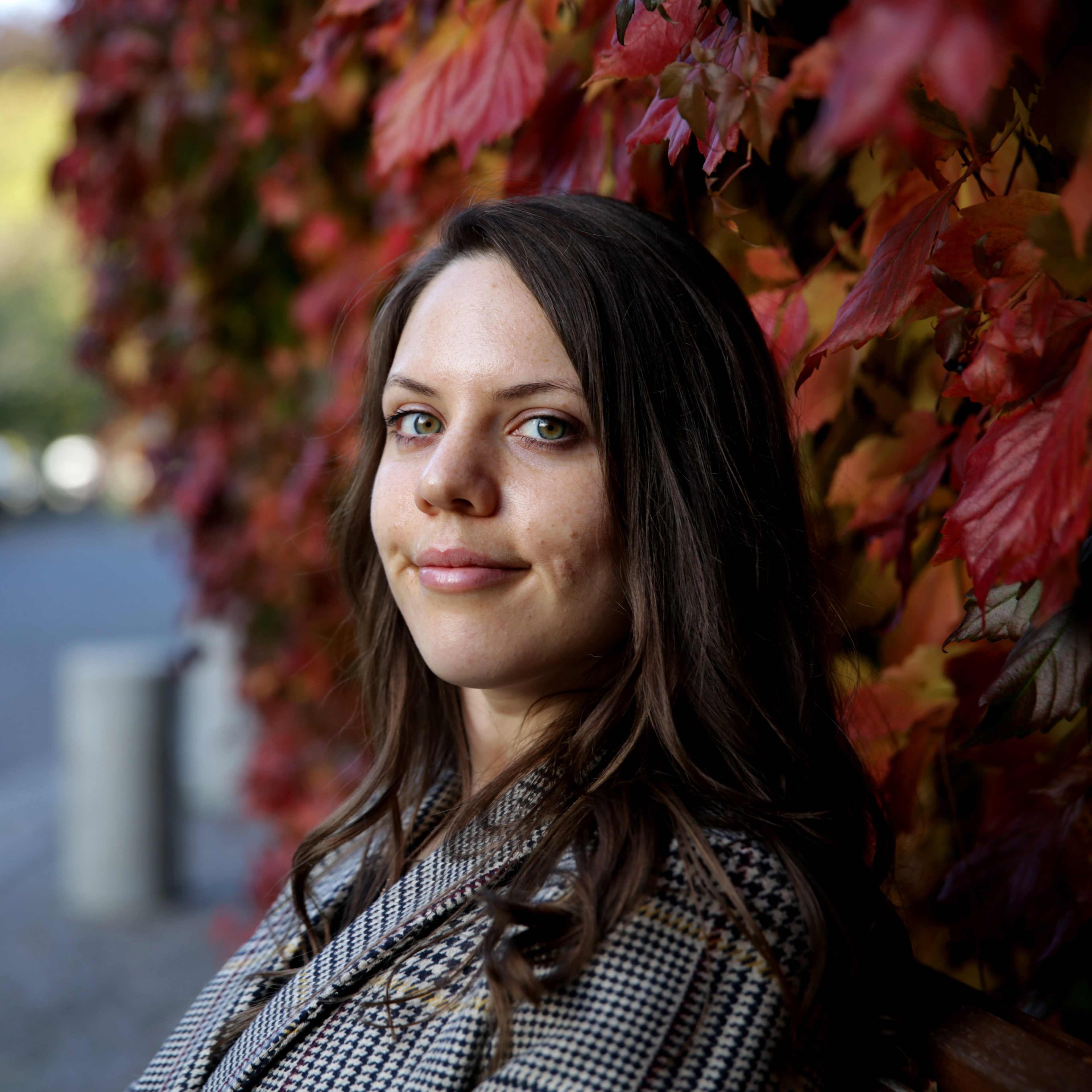
Isabelle Augenstein
University of Copenhagen
Denmark
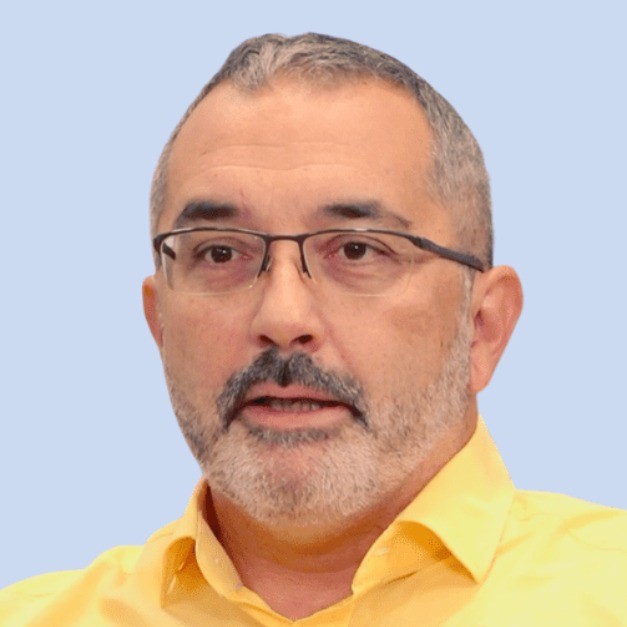
Atanas Kiryakov
Graphwise
Bulgary
Day 1 (12 May): Prof. Dr. Maria-Esther Vidal
Bio: I am a Professor of Computer Science at Leibniz University Hannover and Head of the Scientific Data Management Group at the TIB – Leibniz Information Centre for Science and Technology. I am also a member of the L3S Research Center and the European Laboratory for Learning and Intelligent Systems (ELLIS). My research focuses on research data management, semantic data management, knowledge graphs, and neuro-symbolic artificial intelligence, with the aim of enabling knowledge-driven, explainable AI for scientific discovery and data-driven medicine. I have led numerous EU and nationally funded projects on trustworthy AI and semantic data infrastructures. My work advances Knowledge Graph Ecosystems and has been applied to biomedical knowledge graphs addressing societally critical conditions such as Long COVID, lung and breast cancer, as well as to industrial data integration in large-scale engineering environments. I have received distinctions from the Leibniz Association, including the Leibniz Best Minds Professorship and the Stifterverband Science Award for Responsible Research.
When Data Becomes Knowledge: Semantic Ecosystems for the Third Wave of AI
Artificial intelligence has entered a new phase of capability. Large-scale models can generate text, code, images, and even scientific hypotheses with remarkable fluency. Yet, despite these advances, current AI systems still face important limitations: they often lack grounding in trusted knowledge, provide limited explainability, struggle with causal reasoning, and fail to preserve provenance and contextual understanding. Scaling models alone is unlikely to fully address these challenges. This keynote argues that the next wave of AI will emerge not from isolated models, but from semantic ecosystems: dynamic environments in which data sources, ontologies, knowledge graphs, constraints, AI models, agents, and human experts continuously interact to create, validate, evolve, and apply knowledge. In these ecosystems, semantics transforms raw data into interoperable, reusable, and machine-actionable knowledge, while lifecycle processes ensure quality, consistency, traceability, and accountability over time. Building on recent advances in knowledge graph ecosystems and neuro-symbolic AI, the talk presents how semantic methods support three key capabilities for future AI systems: pathway-aware validation of complex processes, normalization of heterogeneous knowledge graphs into semantically consistent structures, and causal and counterfactual prediction supported by background knowledge. Together, these capabilities move AI beyond pattern recognition toward systems that can reason, explain, and support human decision making. The keynote concludes with applications from biomedicine and industry, including Long COVID research, cancer treatment validation, and causal discovery over biomedical knowledge graphs. These domains illustrate how semantic ecosystems can integrate machine learning, symbolic semantics, reasoning, and domain expertise to support more explainable, trustworthy, and knowledge-aware AI systems. The future of AI will not be shaped by larger models alone, but by semantic ecosystems in which data becomes knowledge, and AI systems move from prediction toward understanding.
Day 2 (13 May): Prof. Isabelle Augenstein
Bio: I am a Professor at the University of Copenhagen, Department of Computer Science, where I head the Copenhagen Natural Language Understanding research group, the Natural Language Processing section. My main research interests are fair and accountable NLP, including challenges such as explainability, factuality and bias detection. Prior to starting a faculty position, I was a postdoctoral researcher in the UCL Machine Reading group, and I hold a PhD from the University of Sheffield. In October 2022, I became Denmark’s youngest ever female full professor. I currently hold a prestigious ERC Starting Grant on 'Explainable and Robust Automatic Fact Checking'. My research has been recognised by a Karen Spärck Jones Award, as well as a Hartmann Diploma Prize. I am a member of the Royal Danish Academy of Sciences and Letters, and co-lead of the Danish Pioneer Centre for Artificial Intelligence. Source: https://isabelleaugenstein.github.io
Understanding the Interplay between LLMs’ Utilisation of Parametric and Contextual Knowledge
Language Models (LMs) acquire parametric knowledge from their training process, embedding it within their weights. The increasing scalability of LMs, however, poses significant challenges for understanding a model’s inner workings and further for updating or correcting this embedded knowledge without the significant cost of retraining. Moreover, when using these language models for knowledge-intensive language understanding tasks, LMs have to integrate relevant context, mitigating their inherent weaknesses, such as incomplete or outdated knowledge. Nevertheless, studies indicate that LMs often ignore the provided context as it can be in conflict with the pre-existing LM’s memory learned during pre-training. Conflicting knowledge can also already be present in the LM’s parameters, termed intra-memory conflict. This underscores the importance of understanding the interplay between how a language model uses its parametric knowledge and the retrieved contextual knowledge. In this talk, I will aim to shed light on this important issue by presenting our research on evaluating the knowledge present in LMs, diagnostic tests that can reveal knowledge conflicts, as well as on understanding the characteristics of successfully used contextual knowledge.
Day 3 (14 May): Atanas Kiryakov
Bio: President of Graphwise - the merger of Ontotext and Semantic Web Company. Founder and CEO of Ontotext. Product manager of GraphDB until 2010. Expert in semantic databases and knowledge graphs. Author of scientific publications with 3000+ citations. Shareholder and member of the board of Sirma Group Holding. Co-founder of the Linked Data Benchmarking Council (LDBC) - the association of the graph database vendors. Member of the board of GATE Big Data Institute. Source: https://www.linkedin.com/in/atanas-kiryakov-62a465/