Conference Metadata
In order to practise what we preach, ESWC has the habit of publishing all conference-related metadata as an RDF knowledge graph.
The ESWC 2026 main track papers metadata can be explored at https://orkg.org/comparisons/R1957056
The ESWC metadata have been published in the Open Research Knowledge Graph (ORKG - https://orkg.org), a platform focused on making research outcomes FAIR and easily comparable. Since comparisons in ORKG require papers to be indexed within the platform, as part of the metadata initiative we imported papers accepted to the main conference tracks - Research, Resource, and In-Use - using the “Contribution” template available in ORKG.
Each paper is represented through structured metadata, including:
- title, authors, keywords, and track, exported from EasyChair;
- a brief textual description of the research objective, research question, method, results, and materials, automatically inferred using LLMs.
Authors were invited to review the LLM-derived metadata and propose changes, where needed, through a structured online questionnaire and during the P&D sessions, resulting in an overall satisfaction rate of 74%.
The resulting author-approved metadata are available as a CSV at https://github.com/mariaangelapellegrino/ESWC2026_metadata_in_ORKG.
The textual descriptions were subsequently converted into a pool of entities using a human-in-the-loop approach that combines automatic suggestions provided by the ORKG import process with human supervision, led by Dr. Vinodh Ilangovan, curator of the ORKG team. This process enables entity interlinking and follows best practices for publishing comparisons in ORKG.
From the authors’ perspective, this approach provides a pre-filled description of their contribution that can be freely enriched and subsequently reused to compare their work with previous or future research. It allows authors to refine the representation of their contribution, connect it to relevant concepts and entities in the knowledge graph, and make their research more discoverable and comparable within the broader research landscape.
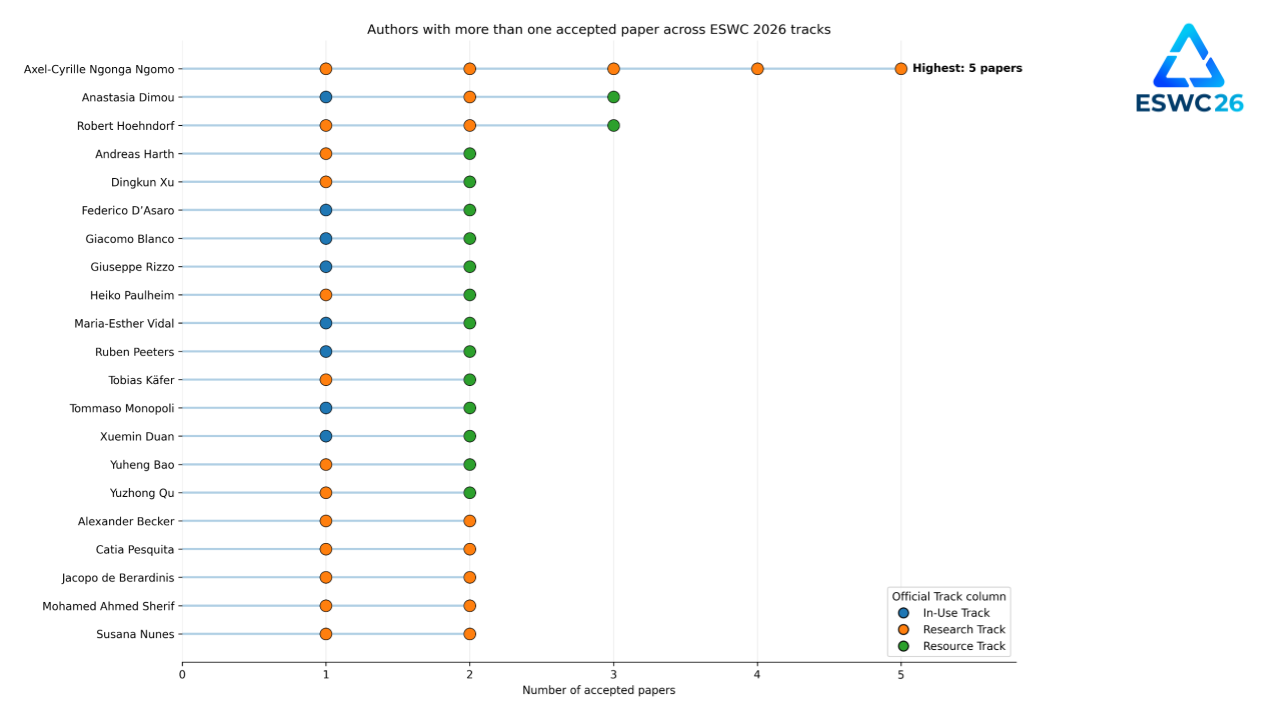
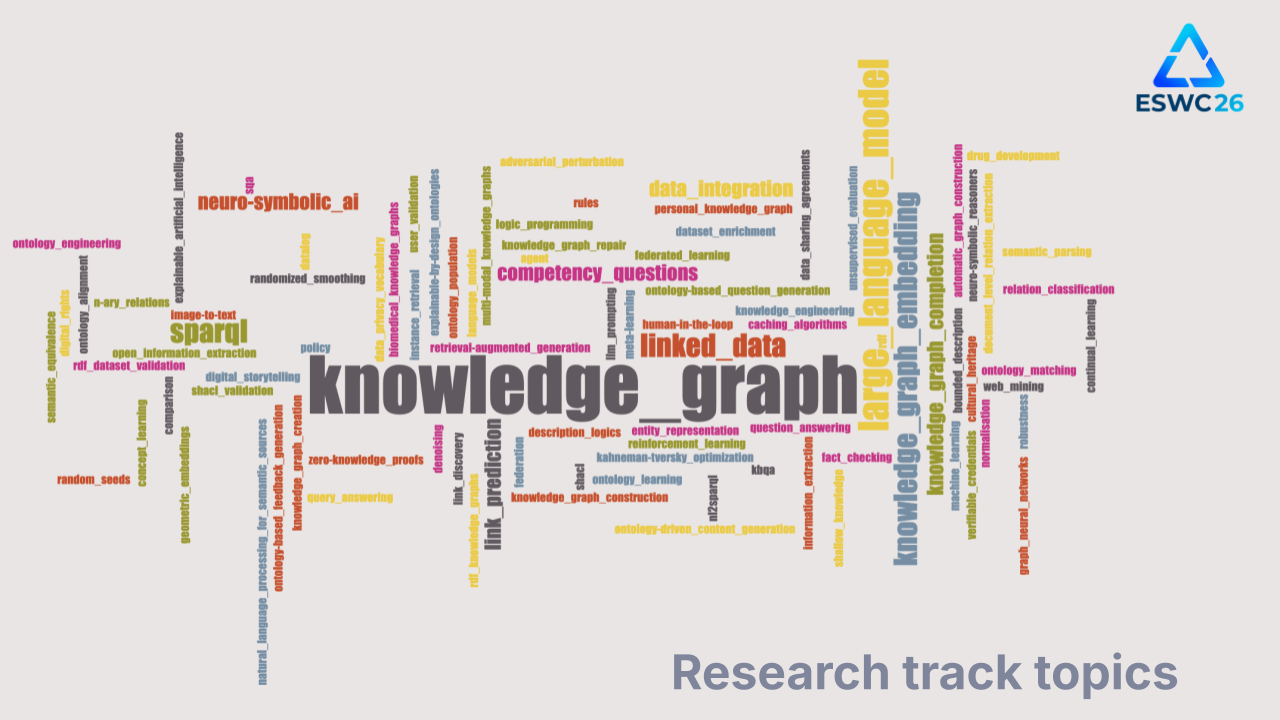
From the organizers’ perspective, conference-level comparisons enable the exploration of recurring topics and emerging patterns across tracks. For example, they make it possible to identify the most prolific contributing authors in the main tracks, analyze emerging topics through track-specific keywords, and study co-occurrences between research topics, methods, and results.